AirGradient Forum

Outdoor Sensor Temperature off

Hi,

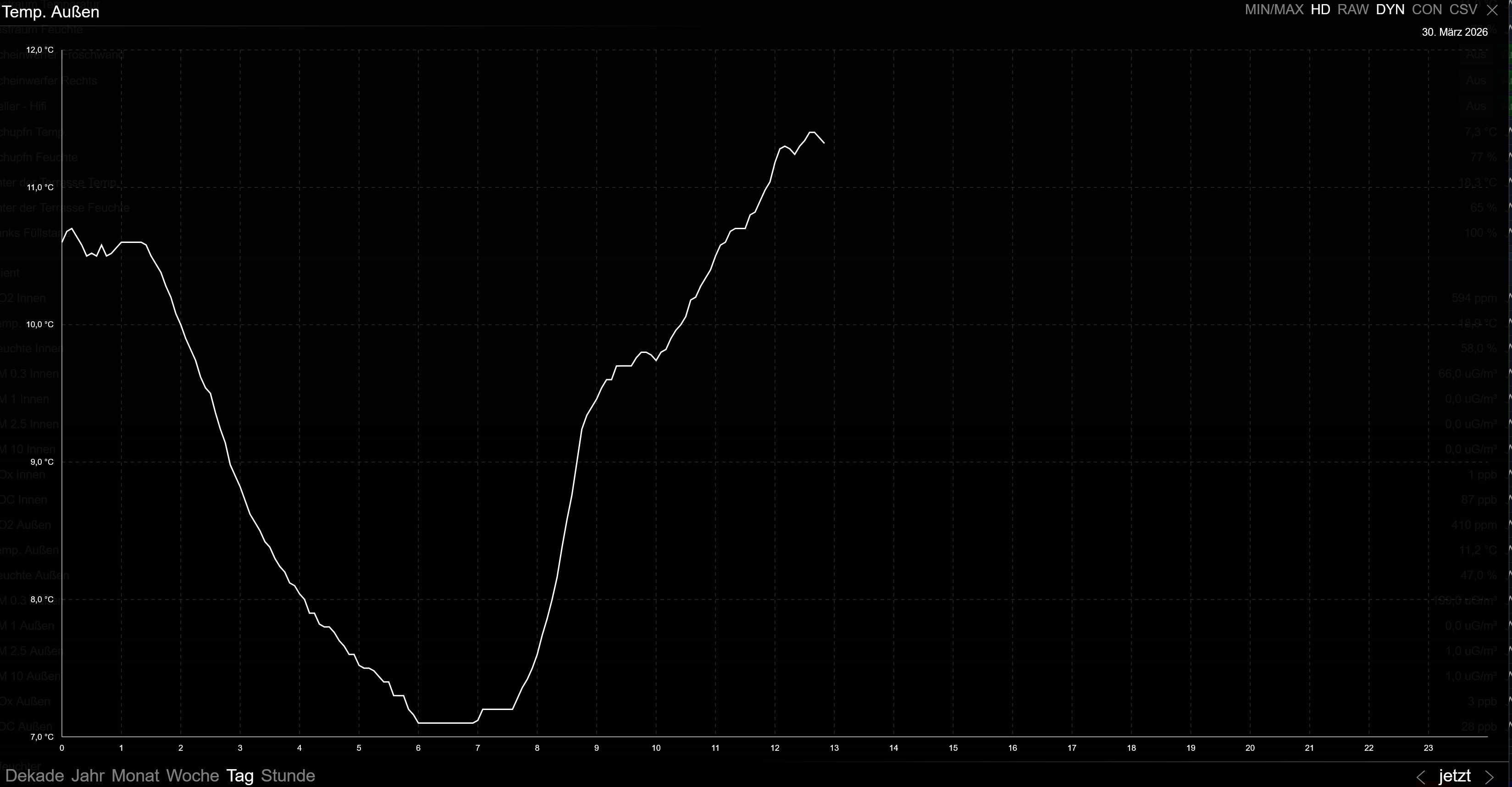
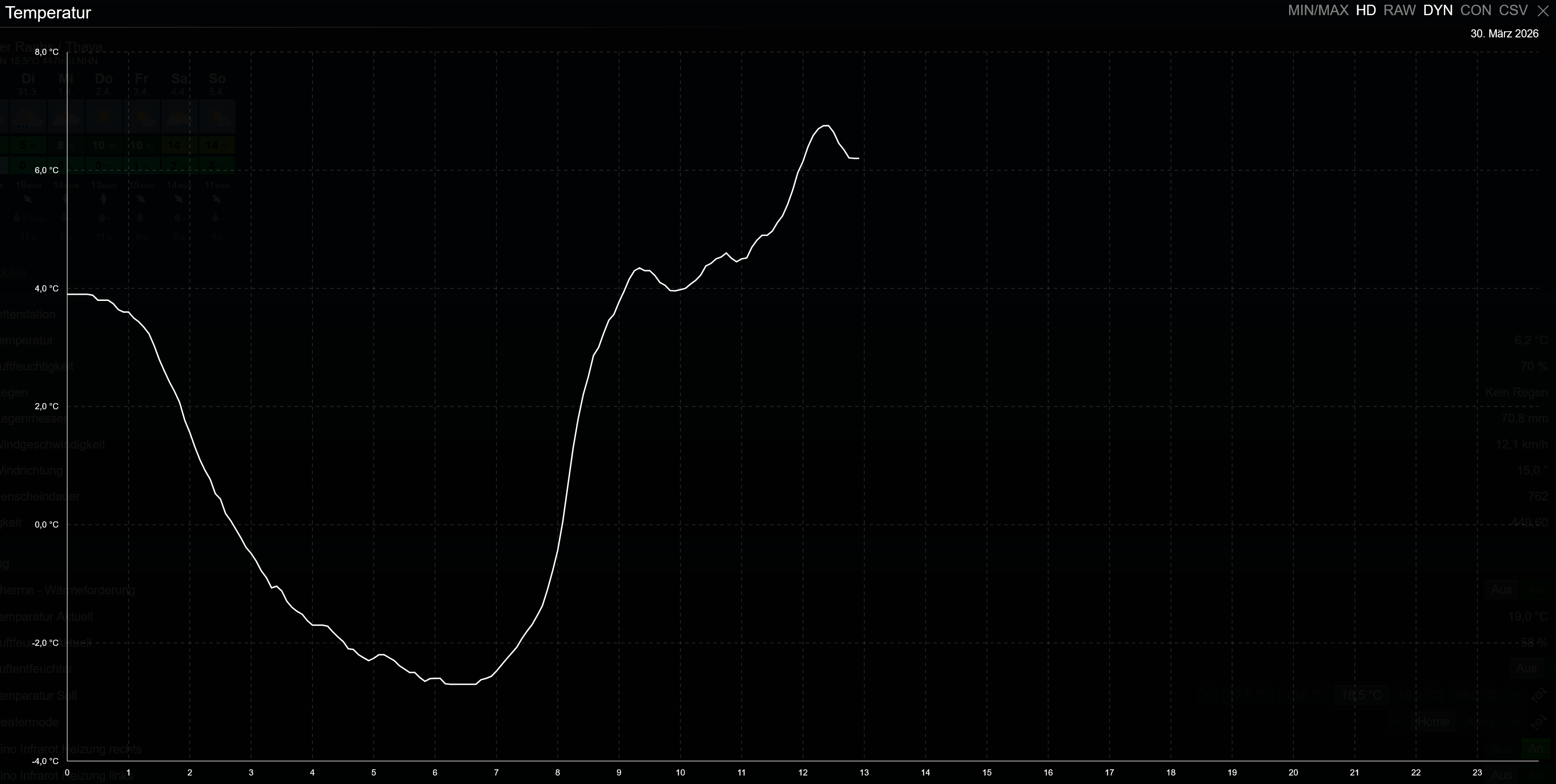
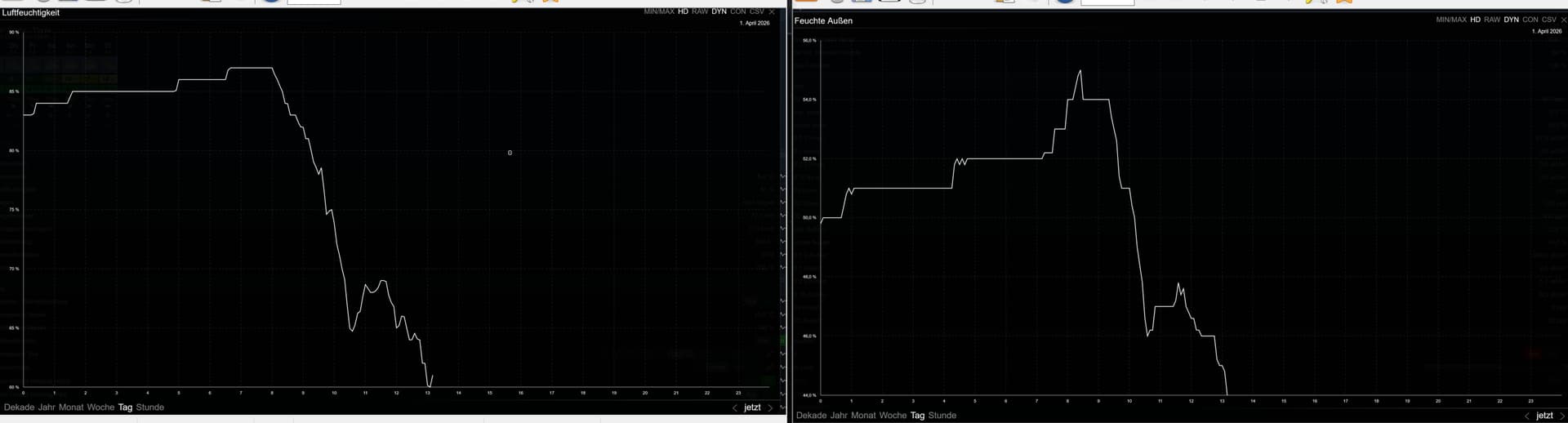
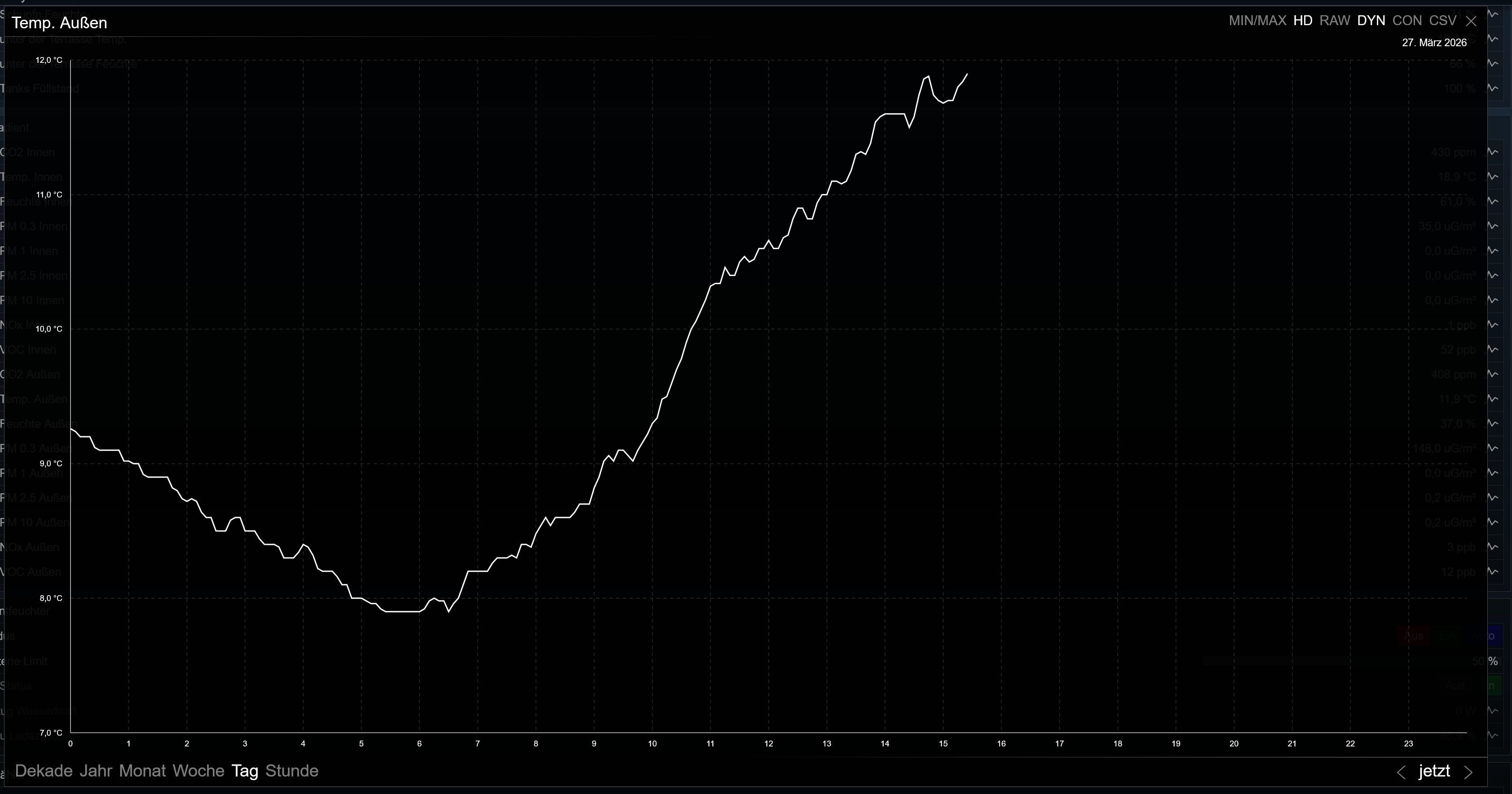
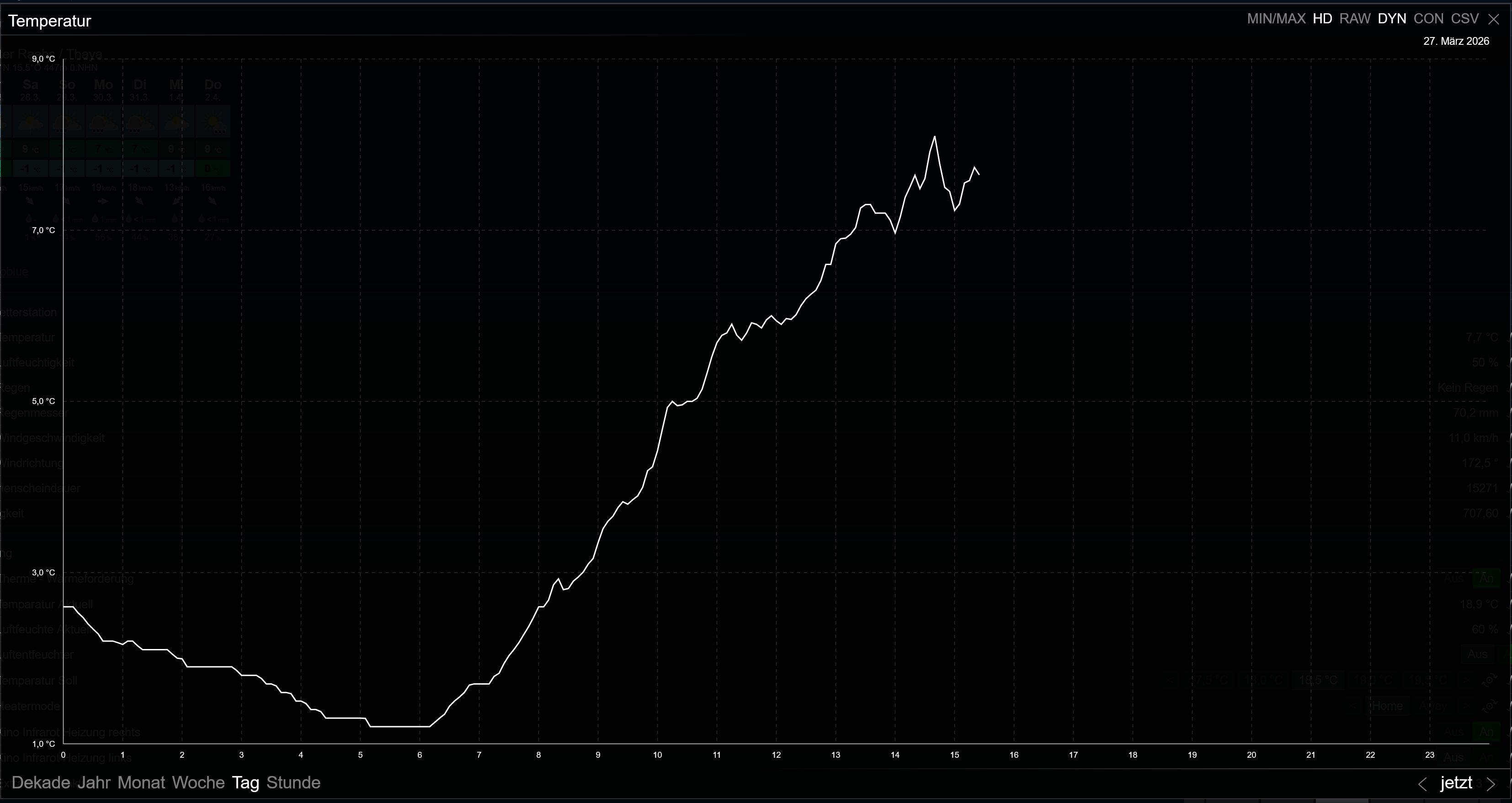
my outdoor sensor shows around 5°+ difference to my other sensors and the official weather app. So I guess the airGradient sensor is´nt working properly.
is there anything I can do to get proper temperature readings?
This is not recently, probably over the last few weeks.

kind regards - MaX

aha, new user can only put one media item in a post, so only one jpeg with the temperature.

here is the second jpgeg

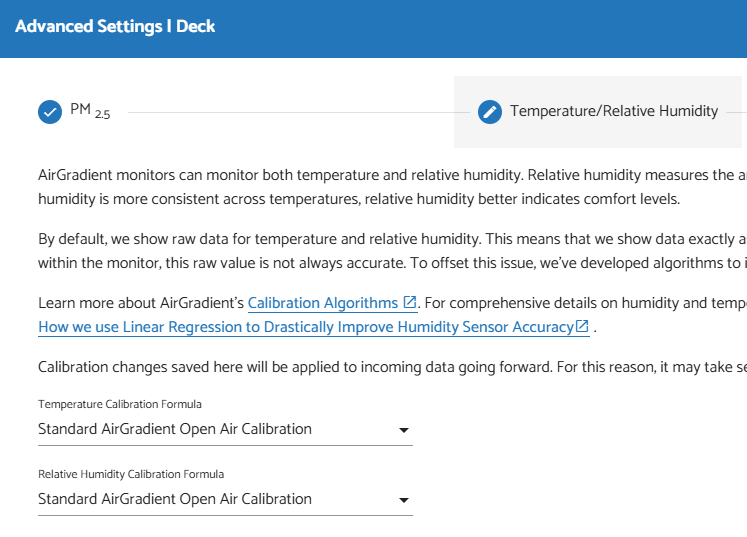
In the Dashboard, find your Outdoor device and click the Gear on the far right under the “Admin” column
Click “Edit Calibration” and see what your Temp and Humidity calibration formula is set to.
If it isn’t, set it to “Standard AirGradient Open Air Calibration” for both and see if that brings it more in line.

changing to the “Standard AirGradient Open Air Calibration” for both did not make any change. It is still about 5° difference. The location of the two sensor is just a few meters apart.

They wil tell you its normal… of even intended…
. I have same problem, with no solution…

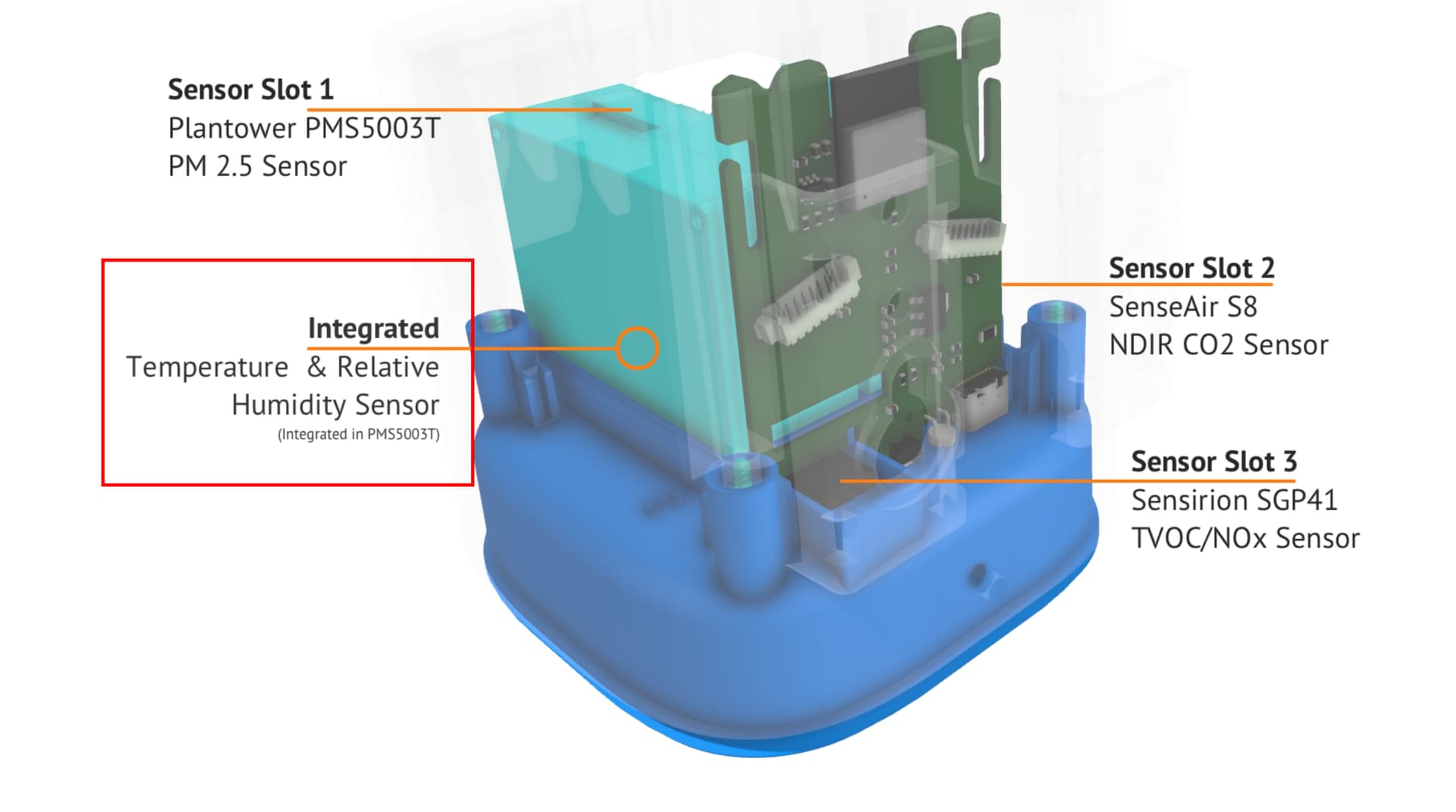
Hi @MaX, since the temperature and humidity sensor in the AirGradient Open Air (ENS210) is an integrated sensor built into the PMS5003T module (inside the PM module), to compensate for PM2.5 accuracy. Especially, relative humidity is used in some calibration formulas to help with the PM2.5 accuracy.

The temperature sensor might read higher than the real ambient temperature because of heat from the working electronics.

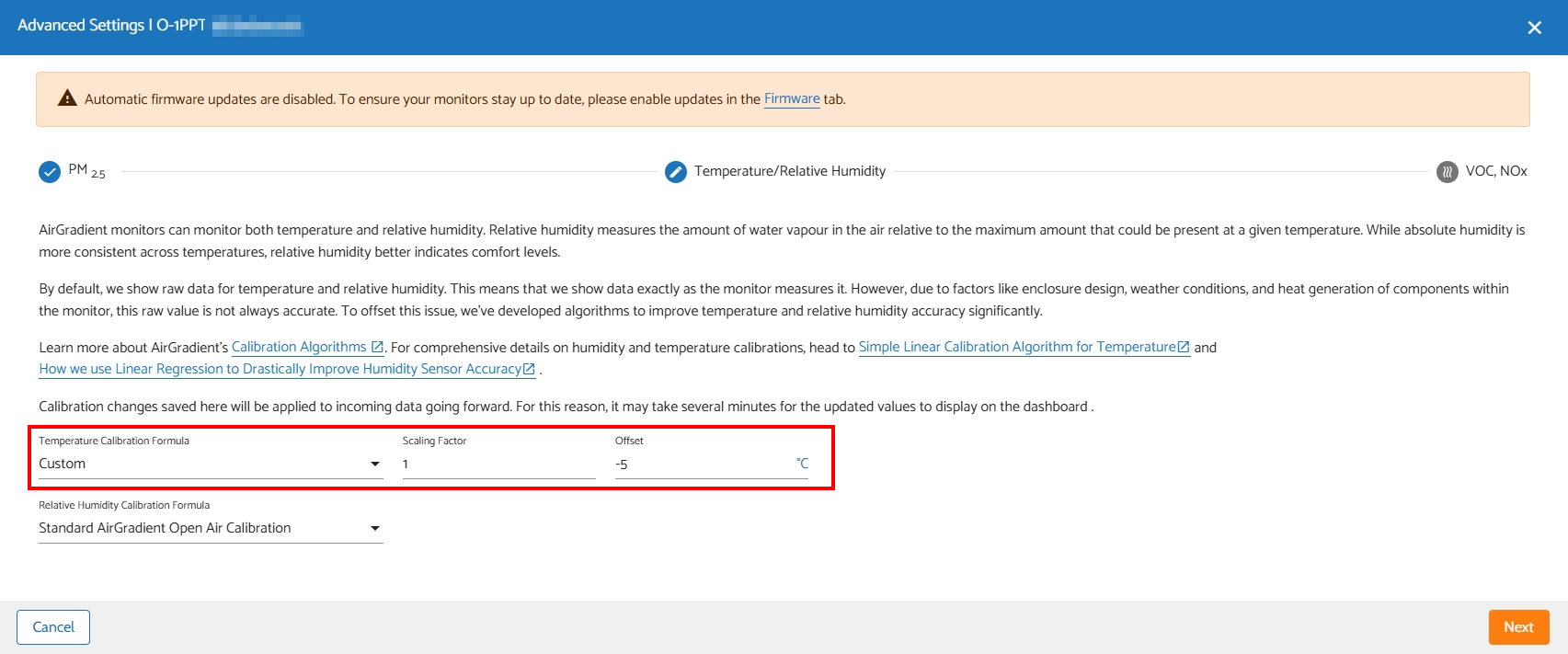
My recommendation for this is that, if you have a reliable temperature sensor for reference, and you are sure that the pattern of how it moves compared to the Open Air’s temperature reading is clear (for example, the reference temperature sensor ALWAYS reads 5 °C less than what we get from the Open Air). You might want to try a custom calibration for Temperature/Relative Humidity. This can be configured via the AirGradient Dashboard, as shown below:

In this case, we can leave the Scaling Factor to 1, and input the Offset to -5.

For those who are not using AirGradient Dashboard (e.g. Home Assistant users who don’t have their monitor connected to AirGradient Dashboard, local-only users), you can PUT configuration to your monitor’s local API via Bruno or Postman, for example. See more details here: arduino/docs/local-server.md at master · airgradienthq/arduino · GitHub
Hi Tai_airGradient,

thank for your reply.
While the pattern is quite the same, the temperature difference various a lot.
Today the difference was between 5° and 10°, a simple offset will not be of any use. There are a few sources apart from the Airgradient that all deliver almost identical values, so that it is quite obvious that the Airgradient sensor is not working properly.

Hi @MaX,

Thank you a lot for providing more information.

As I mentioned that the temperature & relative humidity sensor (ENS210) inside the PMS5003T is primarily used to help with PM2.5 correction. As it is located inside the PMS5003T module, the temperature & relative humidity are measured inside the casing of the module, which may deviate from the real ambient temperature. I understand that this might not be the most satisfying answer, but I just would like to illustrate that it was designed this way.

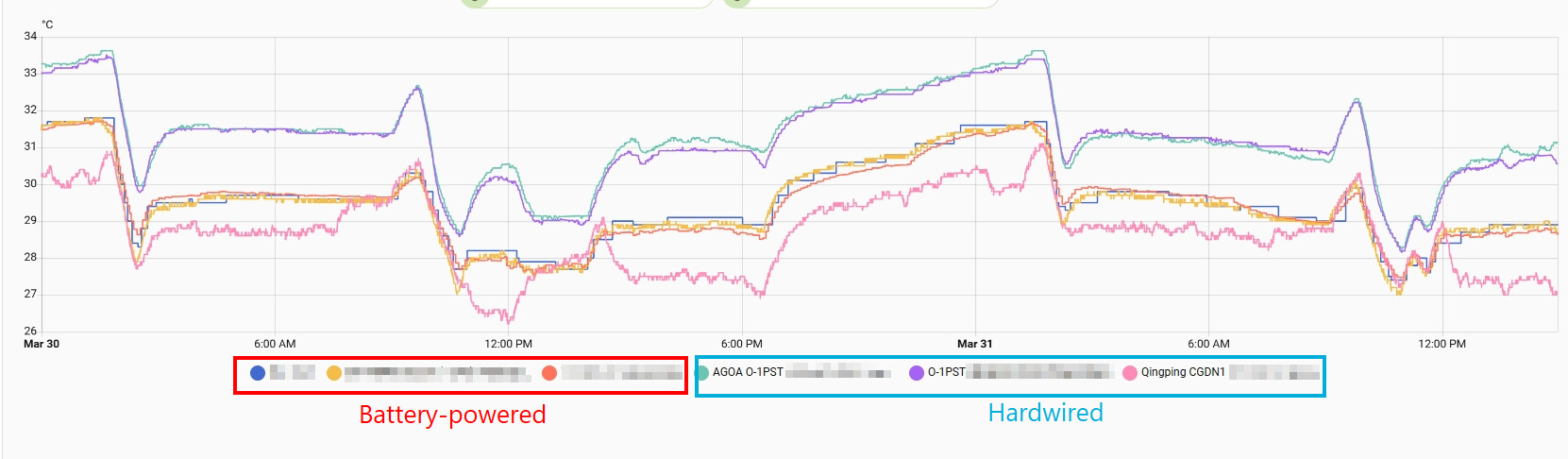
My personal suggestion (as an AirGradient user who has other brands of temperature sensors as well), it might be a good idea to use the AirGradient Open Air primarily for measuring PM, and use a separate temperature sensor that you think you can rely on in parallel to measure the real ambient temperature. From my observation, hardwired monitors’ temperature readings tend to deviate from my other battery-powered temperature sensors.

hmmm,

this isn´t exactly what I expected as an answer. That the desingn makes it impossible to get accurate temperature values and therefor should not be used.
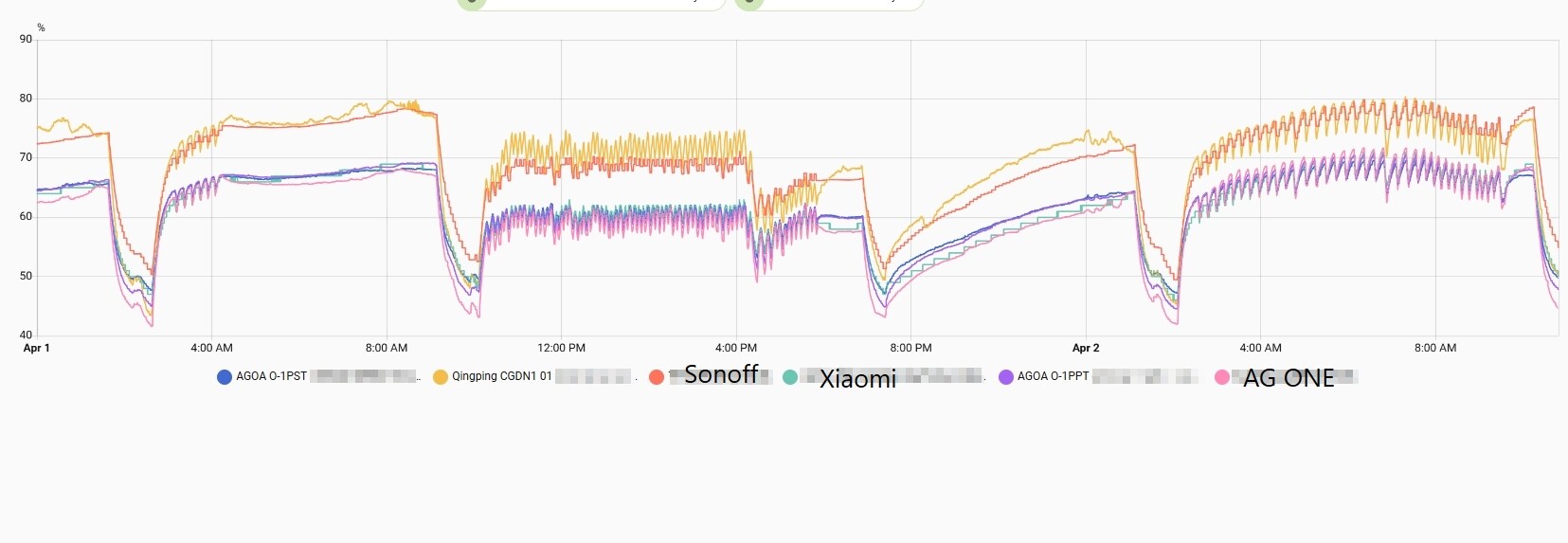
As for me I could somehow live with that, although one has to ask the question. What about the other measurements? Since you mentioned the relative humidity I checked these and they are even further off then the temperature.


I am not going to buy another sensor to check the other readings.

I do somehow regret sending a link to our municipality…
Anyway, good luck with this project.

1 Like

I’m also concerned. I understand that AirGradient isn’t being sold as a weather station, but to say not to rely on it at all does leave a sour taste in my mouth.

The AirGradient Max has a dedicated temp/humidity sensor, but due to its positioning and intended use case as a solar powered device, I’ve also got very unreliable readings in the summer from it.

1 Like

Hi @MaX and @MallocArray, I hear your concern loud and clear (including the Max that @MallocArray mentioned).

Thank you for your honest feedback. I think I’ll have to bring this up with our team to take a look and provide a more detailed and accurate explanation, as well as work on improving the temperature reading accuracy.

For the humidity reading (which is the one measurement that we currently use in calculating a corrected PM 2.5 value, the EPA formula, for example), I just want to share what I found in my observation (I placed them in the same room indoors anyway, which is not a controlled environment). The pattern is consistent with other humidity sensors. Still, this one is just what I observed in my room, which is not a controlled environment, and I have no reference humidity sensor that I can 100% sure of what value is the most accurate. I also need to ask our team, and I’ll get back here once they provide the answer.

Thank you to both of you again. I’ll consult our scientific team about your concerns.

Thanks for sharing!

Recap:

  • AirGradient OpenAir units build internal heat, so raw temperature readings are usually higher than ambient.
  • This difference increases at colder temperatures. On average we observe ~3 °C higher at 10 °C, ~5 °C at 0 °C (details).
  • The “Standard AirGradient Open Air Calibration” should correct this.

Observation:

  • If switching to this calibration doesn’t change the readings, the correction may not be applied properly.
  • If it does change the readings, there shouldn’t be a 5–10 °C difference (unless the sensor is in direct sun).

Could you confirm whether the calibration actually changes the numbers?

2 Likes